
Leaderboard

Popular Content
Showing content with the highest reputation on 02/26/2013 in Articles
-
 Can you imagine having to spend five entire days in the tropics confined to crowded quarters with thousands of others, without functioning plumbing or adequate food? With sewage and its stench surrounding you, helpless to escape? And, needless to say, no air conditioning? That experience is not limited to the unfortunate travelers on the Triumph cruise ship that lost power in the Caribbean last week. To be exposed to those conditions, just visit Korogocho, a massive slum in urban Nairobi, Kenya. Or a slum in Calcutta, or Quito, or any of the hundreds of "high density areas" (as urban slums are euphemistically known) around the world. There, those horrific conditions represent normal life for approximately a billion people globally, and the UN predicts that number will double by the year 2030, meaning that much as 25 percent of the entire projected global population will live in urban slums. We in America are largely insulated from the way the rest of the world lives, but my work in international public health has taken me to a number of places that frame how I see the world today. I will never forget a walk through Korogocho many years ago. I was working with a nonprofit group that had developed a range of services for adolescents living there -- education about reproductive health, training in skills that might someday give them an opportunity for paid employment. But only a few minutes of walking through the narrow, trash-filled paths made me realize the massive challenge of bringing any meaningful improvements to their lives. HIV prevalence rates were high, crime was rampant, abject poverty was ubiquitous, and the struggle for food and clean water was a daily one, with essentially no public services. The crowded houses were makeshift arrangements of rusted tin and irregular pieces of rotting wood. They were adjacent to a massive garbage dump, and the inescapable odors of human excrement and decaying garbage in open sewers made it the most foul-smelling place I had ever been. Yet many urban slum dwellers are born, grow up and die in such settings. While the Triumph cruise vacationers were desperate to leave the ship and get home after their harrowing experience, the dominant fear in most urban slums is that they will be evicted from their humble homes and become even more destitute. Many advocacy groups now resist the use of the term "slum," as it leads to pressure on cities to promote "urban renewal" and raze the shantytowns. But urban slum populations continue to increase. In India, for example, their numbers have doubled since 1970, and in Manila, half the population lives in slum areas. As world population increases, most of that expansion ends up in cities. The reasons for this situation are many and complex. We know that global climate change and corporate agriculture takeovers of massive amounts of farmland have reduced the ability of family farmers to make a living on their own land, and see moving to cities as their only alternative. Economic and "free trade" policies have shackled the ability of poor countries to maintain profitable prices for their products and to subsidize basic needs of their citizens. Meanwhile, the vast inequality in the distribution of the world's wealth continues to grow. But the movement of the world's poor to its cities also represents a migration of people hopeful for a better life, and that hopefulness is also a clear memory from my visit to Korogocho. The program staff there was proud to show us their orderly meeting room, the T-shirt uniforms they sported, and their educational materials. They described their success in helping a few young women become literate and eventually move away to paid employment. The picture of that room, and those young people, is only in my mind, but it's as clear a memory for me as all the smells and the makeshift shacks. While I was sympathetic to the plight of the travelers on the Triumph cruise, I was impatient with all the attention they received. The media reporting was intense, with CNN focusing most of a day on television coverage of the plight of the Triumph passengers. We can exclaim our good fortune that we were not one of the luckless travelers on that cruise, or try to talk about their experience in a way that recognizes how essentially trivial five days of unpleasantness can be in the context of the poverty of most of the rest of the world. Instead of thinking of the predicament of those Americans as an unusual human experience, an aberration, why not use the cruise story to remind ourselves and others that it is all too similar to the living conditions of as much as 15 percent of the world's population? I worry when we in the privileged world think that a bit of inconvenience for a relatively few "people like us" is worth a media storm. What might change that? When they "miss the boat" on such big issues, letters to the newspaper editor or online notes to the stations we most watch or listen to would help. It's also important to make positive comments on stories that give you new perspectives and provide serious analysis on important issues. You might follow a media source that challenges mainstream coverage, such as FAIR (Fairness and Accuracy in Reporting). However it's done, we need to push our public media to include broader perspectives -- that sometimes include the rest of the world. By Mary Anne Mercer, Huffington Post Re-posted on CruiseCrazies.com - Cruise News, Articles, Forums, Packing List, Ship Tracker, and more http://www.cruisecrazies.com1 point
 -
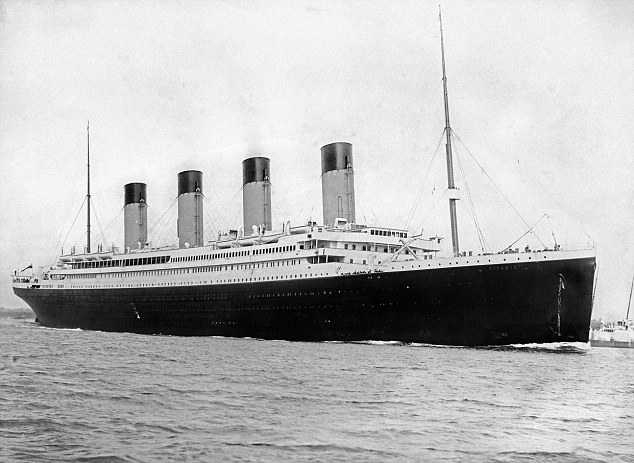 Plans to build a life-size sailing replica of the Titanic look set to go ahead after it was revealed that the shipyard chosen to build the ocean liner has begun upgrading its facilities in preparation of the forthcoming construction work. Titanic II is to be built at CSC Jinling Shipyard Company in Nanjing, China, and is being funded by Australian billionaire businessman Clive Palmer. The ship will take three years to build and will be constructed to the same dimensions as the Belfast-built White Star liner - 270 metres long, 53 metres high and weighing 40,000 tonnes. It will have nine floors and 840 cabins, accommodating 2,400 passengers and 900 crew members, along with Turkish baths, a swimming pool and gymnasiums. Its exterior will be an exact replica of the ill-fated vessel but engineers will incorporate the latest technology when it comes to engines and electronics. It will also remain faithful to the classifications of the original ship with passengers able to buy first, second and third class tickets. The shipyard’s director Ge Biao, told China's Xinhua news agency: 'It's difficult to replicate a luxury liner, but Jinling Shipyard has a history of 60 years of building various kinds of vessels with high quality.' Titanic II is expected to make its maiden voyage from Southampton to New York in 2016 along the same route that the original ship sailed. A spokesman for the shipyard, Li Wenbao, told the Sunday Times newspaper: 'The liner will be equipped with advanced technologies including the latest life-saving and communications systems, to meet the requirements of modern navigation.' Mr Palmer’s company is reported to have been inundated with enquiries from potential passengers, with some offering up to $1m (£640,000) for a chance to be on the maiden voyage. The original Titanic set sail from Southampton on April 10, 1912 and was thought to be unsinkable at the time. But the ship hit an iceberg in the Atlantic on April 14, 1912 and sank the following morning, killing 1,517 passengers and crew. A special cruise recreated the voyage of the Titanic last year to commemorate 100 years since the ship sank. MS Balmoral set sail from Southampton with the exact same number of passengers as the famous liner that sank on its maiden voyage. Passengers onboard the 12-night cruise included relatives of people who died onboard the Titanic and a memorial service was held at the spot where the original ship struck an iceberg and sank. By TravelMail Reporter, Dailymail.co.uk Re-posted on CruiseCrazies.com - Cruise News, Articles, Forums, Packing List, Ship Tracker, and more http://www.cruisecrazies.com1 point